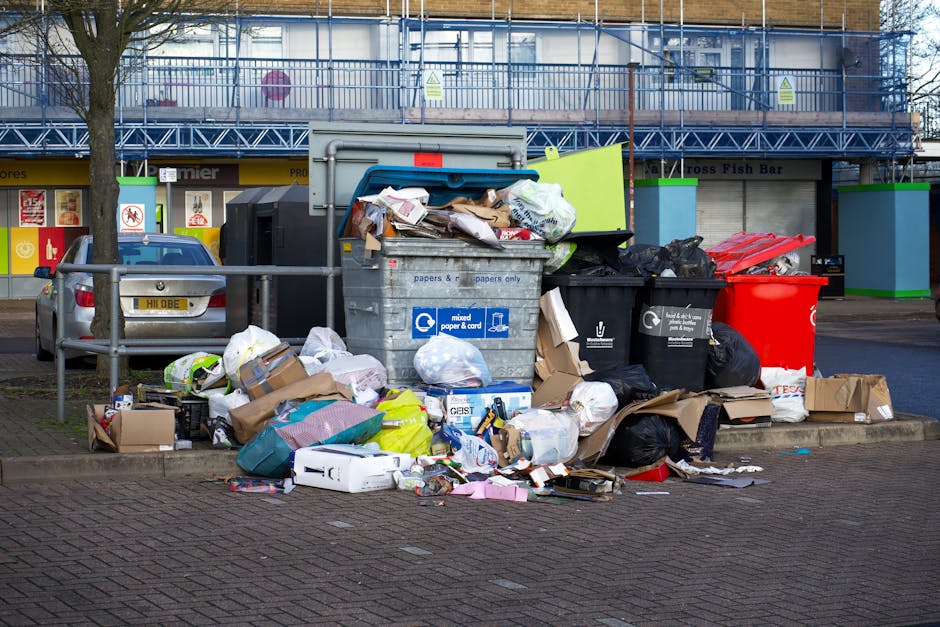
Avoid hidden rubbish removal charges in Uxbridge

If you have ever booked a clearance job and then felt a bit stung by the final bill, you are not alone. Hidden rubbish removal charges can turn a simple tidy-up into a frustrating and expensive experience, especially when you are juggling a house move, a garden clear-out, or a last-minute office purge in Uxbridge. The good news? Most surprise costs are avoidable once you know where they hide, how decent providers price jobs, and what to ask before anyone lifts a bag. This guide walks you through the practical stuff so you can compare quotes properly, spot vague wording, and book with confidence.
It is written for real-world situations: a shed full of damp boxes, a flat clearance with awkward stairs, builder's rubble from a weekend job, or just the kind of clutter that quietly multiplies when nobody is looking. Let's face it, rubbish removal should be straightforward. It often is. But the quote needs to be, too.
Why hidden rubbish removal charges in Uxbridge matter
A cheap headline price is only useful if it is the real price. In rubbish removal, the final cost can change because of load size, labour time, access issues, hazardous items, or disposal handling. That is normal. What is not normal is discovering those extras too late, after the van is loaded and you feel trapped into paying.
For homeowners in Uxbridge, surprise fees are especially annoying during busy periods like moving day or a garden refresh, when you do not have time to negotiate from scratch. For landlords, letting agents, shops, or small businesses, the risk is more than annoyance: an unclear invoice can wreck a budget and make it hard to compare suppliers fairly. If you are weighing up a few providers, looking at pricing and quotes early usually saves a lot of back-and-forth later.
There is also a trust issue. Clear pricing tends to reflect a clear process. Vague pricing often means the service relies on add-ons. Not always, but often enough to be careful.
How hidden rubbish removal charges in Uxbridge usually work
Most rubbish removal quotes are built from a few moving parts. You are usually paying for the waste itself, the vehicle space it uses, the time and labour needed to move it, and disposal costs. Some jobs are simple and can be priced accurately from a description or photos. Others need an on-site look because access is tricky or the load is mixed.
The trouble starts when a quote is based on assumptions. A firm may quote for "a standard load" without explaining what standard means. Or they may leave out stairs, parking restrictions, heavy lifting, dismantling, or extra sorting. A quote can sound competitive and still miss the bits that matter. That is how hidden rubbish removal charges creep in. Quietly. Then all at once.
In practical terms, a trustworthy provider should make it clear what is included, what would count as an extra, and what happens if the job turns out to be larger than expected. If you want a clearer picture of the service structure, their waste removal page can help set expectations before you book.
You may also see different pricing styles:
- Volume-based pricing - you pay for how much van or truck space your waste takes up.
- Load-based pricing - often linked to fractions of a load, such as part-load or full-load.
- Job-based pricing - a fixed price for a defined job scope.
- Item-based pricing - common for furniture or single-item disposal.
Each model can be fair. The real question is whether the quote is specific enough to prevent awkward surprises.
Key benefits and practical advantages
A careful, transparent quote does more than protect your wallet. It makes the whole job easier. You know what will happen, who is doing the lifting, and whether the price still works if the job is slightly bigger than expected. That sort of clarity matters on a rainy Tuesday morning when the collection team is arriving and the driveway already looks too full.
- Better budgeting: you can compare providers on the same basis instead of guessing.
- Less stress: no last-minute haggling while the rubbish is half-loaded.
- Fewer disputes: clear scope means fewer awkward conversations later.
- More efficient service: the team arrives expecting the right load, access, and time needed.
- More confidence in the provider: openness on price usually reflects professionalism elsewhere.
There is a wider benefit too. When pricing is clear, you are more likely to choose the right service for the job rather than overpaying for something that is too broad. For example, a simple sofa removal is not the same as a full loft clearance. If you are dealing with specific items, pages like furniture clearance and furniture disposal can be useful for matching the service to the task.
Who this is for and when it makes sense
Pretty much anyone arranging a clearance in Uxbridge benefits from knowing how hidden charges work. But some people need this guidance more than others.
- Homeowners clearing a garage, loft, spare room, or shed.
- Renters and flat owners dealing with end-of-tenancy clutter or bulky waste in shared access buildings.
- Landlords and agents who need predictable costs for turnaround work.
- Tradespeople with builders' waste, packaging, or renovation leftovers.
- Businesses sorting office furniture, archive waste, or commercial clearances.
It also makes sense if you are comparing more than one quote and one provider seems oddly cheap. That is often the time to slow down and read the detail. A bargain quote with missing labour, access, or disposal fees is not a bargain. It is a teaser.
For broader clearances, you may want to look at service-specific pages such as house clearance, home clearance, flat clearance, or office clearance, depending on the type of waste and the setting.
Step-by-step guidance
Here is the simplest way to avoid hidden rubbish removal charges without turning the whole thing into a research project. Keep it practical.
- List everything that needs removing. Be honest. Include bulky items, broken furniture, bagged rubbish, white goods, and anything awkward.
- Note access details. Stairs, narrow hallways, parking limits, locked gates, long carries, or basement access can all affect cost.
- Ask for an itemised or clearly explained quote. Even if the final price is a single number, you should know what it covers.
- Check what counts as extra. Ask about dismantling, labour, heavy items, mixed waste, and specialist disposal.
- Confirm collection timing. Same-day, next-day, and out-of-hours jobs can carry different expectations.
- Ask how price changes are handled. If the load is bigger than expected, what happens before work begins?
- Put key points in writing. Email, message, or booking notes are all useful. A phone promise alone is easy to misremember.
A short example: if you describe "a few bags and a wardrobe," but the team arrives to find a full shed, an old mattress, a broken fridge, and half a patio's worth of rubble, the original quote probably will not stand. Fair enough. But if the extra charge is explained before loading starts, that is the difference between a normal adjustment and a hidden fee.
Expert tips for better results
The small details make the biggest difference. In our experience, the best way to prevent surprise charges is not just asking "how much?" but asking the right follow-up questions.
- Send photos from a few angles. Include access points, not just the rubbish pile itself.
- Mention anything heavy or unusually awkward. Old wardrobes, wardrobes with mirrors, broken appliances, or waterlogged garden waste can change the workload.
- Be specific about dismantling. "As is" and "taken apart" are very different jobs.
- Ask whether labour is included. This is one of the most common places for confusion.
- Check if loading and sweeping are part of the service. Some providers include tidying; others do not.
- Clarify whether recycling or sorting is included in the price. A reputable provider should explain how waste is handled, especially for mixed materials.
One more thing: if a provider sounds vague on the phone, that usually does not get better after the job starts. You do not need a lecture. You need a clear answer. Simple as that.
If sustainability matters to you, it is worth asking how the company approaches sorting and reuse. Their recycling and sustainability information may give you a sense of their waste-handling standards and how they think about diversion from landfill.
Common mistakes to avoid
Most surprise charges come from a handful of predictable mistakes. Once you know them, they are easier to dodge.
- Only asking for the cheapest quote. A low number without detail is not a win.
- Forgetting access restrictions. Parking, stairs, and long carries matter more than people expect.
- Assuming "everything included" really means everything. It often does not.
- Not checking whether the quote is fixed or estimated. Those are very different things.
- Leaving out a few extra items. Those "just one or two more things" often lead to confusion.
- Rushing the booking. If the provider pressures you to confirm instantly, slow down a touch.
There is also a very human mistake: forgetting what counts as clutter because you have been living with it for months. We have all done it. The pile in the corner becomes part of the wallpaper. That is why a proper walkthrough, even a quick one, helps so much.
Tools, resources and recommendations
You do not need fancy software or a giant spreadsheet. A few simple tools are enough to avoid hidden rubbish removal charges in Uxbridge.
- Phone photos: take clear, well-lit images of the waste and access route.
- Basic notes: write down item counts, dimensions if known, and any awkward bits.
- Comparison list: compare what each quote includes, not just the final number.
- Email trail: keep the booking summary and any price promises together.
- Service pages: use clear service descriptions to match the job, such as builders' waste clearance, garden clearance, garage clearance, or loft clearance.
For business customers, it can also help to review business waste removal if you need a regular or commercial service rather than a one-off domestic clearance. That little distinction can save a lot of awkwardness later.
And if payment security matters to you, it is sensible to understand the provider's approach before handing over card details or confirming a booking. Their payment and security page is a practical place to start.
Law, compliance, standards and best practice
Rubbish removal is not just about labour and vans. Waste handling in the UK sits within a broader framework of legal duties and responsible business practice. You do not need to become a compliance expert, but a basic understanding helps you spot serious providers from the ones who are winging it.
At a high level, legitimate waste carriers should be able to explain how they handle waste, keep appropriate records, and dispose of materials responsibly. For you as the customer, the practical point is simple: choose a company that is transparent about what happens to your waste and does not make strange claims they cannot back up. If something sounds too casual, it probably deserves another question.
Best practice usually includes:
- clear pricing before collection starts;
- honest description of exclusions and extra charges;
- safe lifting and transport methods;
- responsible sorting and disposal;
- respect for access, neighbours, and shared spaces;
- clear complaint handling if something goes wrong.
It is also sensible to review how a company approaches safety and operational care. Pages such as health and safety policy, insurance and safety, and complaints procedure can give useful reassurance about how the business is run.
If you are checking the organisation behind the service, the about us page is also worth a look. It is a good sign when a company is willing to explain who they are, how they work, and how they handle customer issues.
Options, methods and comparison table
Different rubbish removal approaches suit different jobs. Choosing the wrong one can make hidden charges more likely, because the service is not built for your type of waste.
| Option | Best for | Strengths | Watch out for |
|---|---|---|---|
| Fixed-price clearance | Clear, well-described jobs | Good predictability and easier budgeting | Needs accurate details upfront |
| Load-based removal | Mixed household or bulky waste | Flexible for loads that vary a bit | Ask what counts as a full load |
| Item-based disposal | Single furniture items or appliances | Simple and quick to understand | Extra charges may apply for stairs or heavy lifting |
| On-site quote | Unclear or complicated jobs | Better accuracy for awkward access or mixed waste | Takes more time, but usually worth it |
If you are clearing a particular space, the method matters. A garage, loft, or garden job can be straightforward on paper and messy in reality. A wet pile of garden cuttings, for example, weighs more than it looks. Old timber is another sneaky one. Not glamorous, but true.
Case study or real-world example
Here is a realistic example from the sort of job many Uxbridge households face. A customer needs a mix of furniture, bagged rubbish, and a couple of broken storage units removed from a first-floor flat. The original quote was based on a quick description over the phone. When the team arrives, they discover a narrow stairwell, one awkward turn, a parking issue, and more bags than expected. Suddenly the cheap quote is not so cheap.
Now compare that with a better approach. The customer sends photos of the flat entrance, the stairwell, the items, and the access route. They mention that one wardrobe may need dismantling and that parking is limited. The provider gives a clearer quote with those details already built in. The job still costs what it should, but no one is surprised, and the customer knows why.
That is really the whole game. Not avoiding fair charges. Avoiding unfair surprise ones.
A similar issue can happen with a home clearance, especially where there are layers of clutter, loft access, or a last-minute add-on from the garage. If that sounds familiar, the service pages for home clearance and house clearance can help you think through the scope before booking.
Practical checklist
Use this checklist before you confirm any rubbish removal booking in Uxbridge.
- Have I described every item honestly, including awkward extras?
- Have I sent photos of the rubbish and the access route?
- Do I know whether the quote is fixed or estimated?
- Have I checked whether labour, loading, and disposal are included?
- Do I know if stairs, long carries, dismantling, or heavy items cost more?
- Have I asked what happens if the load is bigger than expected?
- Is the pricing summary in writing?
- Have I matched the job to the right service type?
- Do I understand the provider's payment terms before collection?
- Have I checked the company's safety, complaints, and recycling information?
If you can tick most of those off, you are in a much stronger position. And if a provider resists answering these basics, well, that tells you a lot in itself.
Get a free quote today and see how much you can save.
Conclusion
To avoid hidden rubbish removal charges in Uxbridge, focus on clarity before collection day, not after. Be specific about what needs removing, ask what is included, make access issues visible early, and keep the key details in writing. That is usually enough to turn a vague quote into a fair one.
The best rubbish removal experience is not the cheapest-looking one. It is the one that feels calm, predictable, and properly explained. You know where you stand, the team knows what they are coming to collect, and nobody ends up arguing over a missing item or an unexpected add-on at the kerb. Simple, really. Not always easy, but simple.
If you are ready to compare options, take a breath, gather a few photos, and ask the awkward questions upfront. Future-you will be glad you did.
Frequently Asked Questions
What counts as a hidden rubbish removal charge?
It is any cost that appears after the initial quote without being explained clearly beforehand. Common examples include extra labour, awkward access, heavier loads than expected, dismantling, or special disposal handling.
How do I know if a rubbish removal quote is genuine?
A genuine quote usually explains what is included, what could cost more, and whether the price is fixed or estimated. If the price sounds very low but the details are vague, ask for clarification before booking.
Should I send photos before getting a quote?
Yes, absolutely. Photos make a big difference, especially for mixed waste, bulky items, stair access, or jobs in flats. A few clear pictures can prevent most misunderstandings.
Why do stairs or long carries affect the price?
Because they change the amount of time and physical effort needed. A job that looks small from the front door can become much more involved once you factor in access, distance, and lifting.
Is the cheapest rubbish removal quote usually the best one?
Not usually. The cheapest quote can be fine, but only if it is clear and complete. If important costs are left out, the final bill may end up higher than a more transparent quote.
Can I avoid extra charges by being more specific?
Yes. Specific descriptions help the provider price the job properly. Include item counts, access details, heavy objects, and whether anything needs dismantling.
What should a rubbish removal company tell me before they start?
They should explain the price, what the quote covers, any exclusions, and what happens if the load differs from the description. Good communication at this stage is a strong sign.
Do I need a different service for furniture, garden waste, or builders' rubbish?
Often, yes. Different waste types can involve different handling and disposal needs. It helps to use the most relevant service page, such as furniture clearance, garden clearance, or builders' waste clearance, so the quote fits the job.
What if the team finds more waste on arrival than I mentioned?
A fair provider will explain the price change before proceeding. If they do not, that is where hidden charges can become a problem, so pause and ask for the revised cost in plain terms.
Should I worry about payment terms?
Yes, in a sensible way. You want to know how payment works, when it is due, and whether card or cash arrangements are confirmed in advance. Clear payment terms reduce disputes later on.
How can I check that a provider takes safety seriously?
Look for clear information about health and safety, insurance, and complaints handling. A professional company should be able to explain how it protects customers, workers, and property during collection.
What is the best first step if I want to avoid hidden charges in Uxbridge?
Gather photos, make a list of the waste, and ask for a quote that clearly states what is included. That one habit does most of the heavy lifting, honestly.