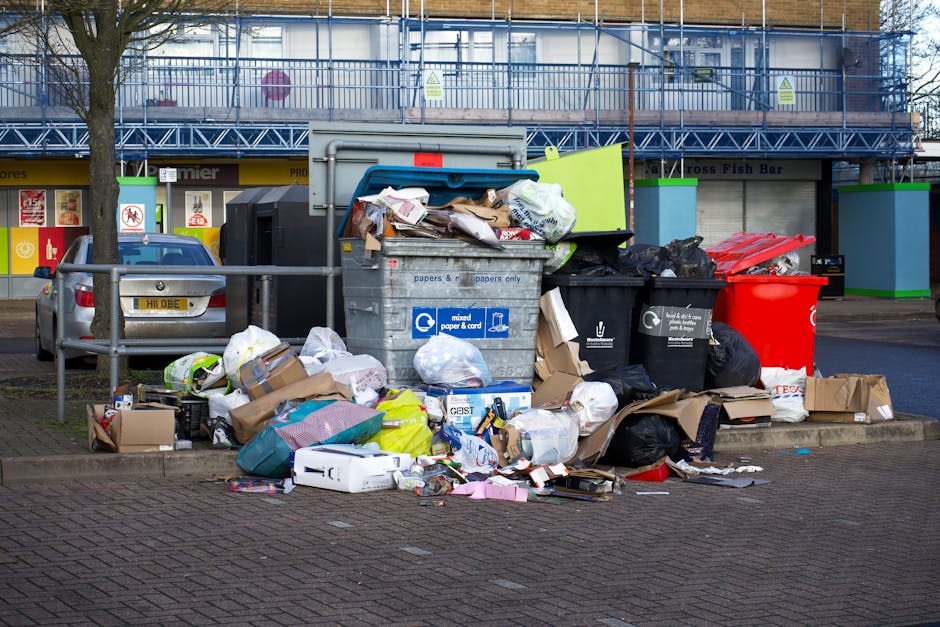
Hillingdon Council rubbish rules UB8 what you must know
If you live, rent, own, or manage property in UB8, rubbish rules can feel simple right up until they are not. One extra bag, the wrong bin, a missed collection, or a bulky item left on the pavement can quickly turn into a messy problem. This guide on Hillingdon Council rubbish rules UB8 what you must know breaks everything down in plain English, so you can stay compliant, avoid complaints, and get rid of waste without the usual headache. Truth be told, most issues are less about "bad intentions" and more about not knowing the local routine.
Below, you will find what matters most: how the system generally works, what residents usually need to check, where mistakes happen, and when a professional clearance service makes life easier. If you are clearing a home, sorting a garden, dealing with a flat move, or trying to shift awkward waste without upsetting the neighbours, this is the practical version.
Quick takeaway: In UB8, the safest approach is to separate waste properly, follow local collection guidance, keep items out of the street unless they are being collected, and use the right route for bulky or specialist rubbish. Simple enough on paper. In real life? Not always.
Table of Contents
- Why Hillingdon Council rubbish rules UB8 what you must know Matters
- How Hillingdon Council rubbish rules UB8 what you must know Works
- Key Benefits and Practical Advantages
- Who This Is For and When It Makes Sense
- Step-by-Step Guidance
- Expert Tips for Better Results
- Common Mistakes to Avoid
- Tools, Resources and Recommendations
- Law, Compliance, Standards, or Best Practice
- Options, Methods, or Comparison Table
- Case Study or Real-World Example
- Practical Checklist
- Conclusion
- Frequently Asked Questions
Why Hillingdon Council rubbish rules UB8 what you must know Matters
Rubbish rules matter because waste is one of those things people only notice when it goes wrong. A bin overflowing on collection day, a sofa left outside too early, or builders' rubble dumped in the wrong place can trigger complaints very fast. In a busy area like UB8, where streets, flats, terraces, and small businesses often sit close together, the impact is visible. One untidy pile can affect the whole road.
There is also a practical side. If you do not separate waste correctly, you may miss collections, attract pests, or end up paying more than necessary for clearance. And if you leave rubbish in a shared area, even for a day or two, neighbours may treat it as fly-tipping. That is fair enough, really. Nobody enjoys walking past an old mattress in the rain at 7 a.m.
Understanding the local approach helps you make better decisions before the bags pile up. That might mean booking the right collection, using the correct recycling stream, or arranging a full home clearance when the job is bigger than the weekly bin can handle. For landlords and property managers, it is also about keeping tenants happy and avoiding those awkward, time-consuming clean-up calls.
There is a trust element too. If you dispose of waste properly, it shows care for the street, the environment, and the people living around you. That sounds lofty, but it really is just about doing the decent thing and avoiding hassle later.
How Hillingdon Council rubbish rules UB8 what you must know Works
Most local rubbish systems work in layers. You have routine household collections, recycling streams, garden waste rules if applicable, bulky waste arrangements for large items, and special handling for certain materials. In UB8, the key is to know which type of waste you are dealing with before you set it out. That one step saves a surprising amount of trouble.
As a resident, your day-to-day focus is usually on the normal collection routine: household bins, recycling containers, and any guidance for food waste, garden waste, or extra refuse. If you have more than ordinary household rubbish, the rules become more specific. A broken wardrobe is not the same as a black bag. Paint tins are not the same as cardboard. A bathroom rip-out is not the same as a tidy spring clean.
For many households, the decision tree looks like this:
- Regular household waste: Keep it in the correct bin or container, and present it on the right day.
- Recycling: Separate clean recyclable items so they can be processed properly.
- Bulky items: Use the appropriate collection or clearance route rather than leaving them outside.
- Garden waste: Bag or bundle it according to local rules, and do not assume it can go with general rubbish.
- DIY or builders' waste: Treat it separately. Bricks, plasterboard, timber, tiles, and rubble usually need another route entirely.
That last one catches people out constantly. A quick kitchen refresh turns into a mini building site, and then the waste is suddenly too heavy, too dusty, and too much for the normal bin. If that sounds familiar, a dedicated service such as builders waste clearance may be the cleaner option.
There is also a common-sense part of the system that does not always get written down plainly: do not obstruct pavements, do not block access, and do not assume you can leave items out whenever it suits you. Collection timing matters. So does storage. So does keeping waste contained. Nothing fancy. Just basic order, which, let's face it, makes life easier for everyone.
Key Benefits and Practical Advantages
Following the right rubbish rules is not only about avoiding penalties. It has everyday benefits that make your week calmer and your property look better. Small things, yes, but they add up.
- Cleaner kerb appeal: Neat waste handling keeps your home or business frontage looking cared for.
- Fewer neighbour disputes: Shared streets and flats work better when waste is handled predictably.
- Lower contamination risk: Correct sorting helps recycling and reduces rejected loads.
- Less stress on collection day: No last-minute panic because bags are split, overfilled, or in the wrong place.
- Safer walkways: Clear paths reduce trip hazards, especially around flats and communal entrances.
There is a commercial angle too. If you run a small office, retail unit, or trade premises in UB8, tidy waste management reflects on your brand. It sounds a bit obvious, but customers do notice a battered skip, a leaking bag, or a pile of cardboard gathering in the wind. If your workplace produces regular waste, structured support like business waste removal can keep the process smoother.
And when a whole property needs clearing, especially after a move, bereavement, or long-term storage build-up, the right service can save a huge amount of lifting, sorting, and second-guessing. A good clearance plan means less mess, fewer trips, and less chance of accidentally mixing recyclable and non-recyclable items. Not glamorous. Very useful.
Who This Is For and When It Makes Sense
This advice is for more people than you might think. It is not just for homeowners with overflowing bins. It helps renters, landlords, flat managers, business owners, and anyone trying to clear a property without making a nuisance of themselves.
- Homeowners: Useful during decluttering, renovations, garden jobs, or after a big family clean-out.
- Renters: Helpful when moving out and needing to leave the property tidy.
- Landlords: Important after tenant changeovers, especially where waste has been left behind.
- Letting agents: Handy for organising quick, predictable clearances between tenancies.
- Businesses: Relevant for office refits, stock disposal, archived paperwork, or general operational waste.
- Trades and contractors: Essential when dealing with renovation debris, packaging, or mixed site waste.
It also matters when the waste is emotionally loaded. If you are clearing a family home, the job often takes longer because every item seems to carry a story. A chipped mug, an old chair, a box of paperwork. That is normal. In those cases, a slower, more organised approach is usually best, and sometimes a full house clearance is the more realistic option.
For flats, things can be trickier. Shared bins fill quickly, access is tighter, and neighbours are closer to your decisions than you might like. If you live in a block, a flat clearance service can be far easier than trying to move bulky waste through stairwells and communal hallways by yourself. Been there, seen that, not fun.
Step-by-Step Guidance
Here is the simplest way to stay on the right side of local rubbish expectations in UB8. Nothing complicated, just a methodical approach.
- Identify the waste type. Start by separating general rubbish, recycling, garden waste, bulky items, electrical items, and DIY debris.
- Check what can go in the normal collection. Most problems happen when people assume "one bag is one bag". It is not always that simple.
- Keep recyclables clean and separate. Rinse where needed, flatten cardboard, and avoid mixing food waste with recyclables.
- Bag or contain loose rubbish. Broken bits, sharp edges, and small fragments should not be left exposed.
- Plan where items will sit before collection. Keep everything accessible without blocking footpaths, gates, fire exits, or communal entrances.
- Arrange a separate route for bulky or specialist waste. Sofas, wardrobes, fridges, and builders' debris usually need more than the weekly bin.
- Remove waste promptly. The longer it sits, the more likely it becomes a complaint or a nuisance.
A real-world example: you clear out a spare room on a Sunday, pile up bags, and think you will sort it later. By Tuesday, the hallway smells faintly musty, the cardboard has softened, and the old lamp is leaning into the stair rail like it has given up on life. Sorting it properly on day one would have saved all of that. A bit dramatic, but you get the idea.
If the waste is more than you can handle safely, a professional team can take it in one visit. That can be especially useful for heavier or awkward items such as furniture, garden cuttings, or loft contents.
Expert Tips for Better Results
After dealing with clearance jobs of all shapes and sizes, a few habits consistently make rubbish management easier. These are the sort of things people rarely mention until you are already knee-deep in bags.
- Sort first, carry second. Do not drag everything outside and hope for the best. Sort indoors or in a safe staging area.
- Use sturdy bags and boxes. Weak packaging tears at exactly the wrong time. Usually on the stairs. Naturally.
- Keep sharp items wrapped. Broken glass, metal edges, and splintered wood should be protected.
- Do one room at a time. It sounds slow, but it prevents waste from spreading through the whole property.
- Book ahead for larger jobs. If the rubbish is likely to exceed normal capacity, do not leave it to chance.
- Think about access. A clear path saves time and reduces damage to walls, doors, and banisters.
Another useful habit is to photograph piles before clearance. Not for show, just for clarity. It helps you estimate volume, decide whether you need help, and avoid the classic "I thought it was only two bags" moment. Spoiler: it never is.
And if you are tackling a garden, do not underestimate the volume. Branches, soil, old pots, broken fencing, and lawn clippings can fill up a space quickly. A dedicated garden clearance can save your bins from being overwhelmed.
Common Mistakes to Avoid
The biggest mistakes are usually the least dramatic ones. They are the everyday slips that become expensive or inconvenient later.
- Leaving rubbish out too early: This can create obstruction, attract mess, and annoy neighbours.
- Mixing everything together: It is tempting, but mixed loads are harder to manage and may not be accepted as expected.
- Ignoring bulky waste rules: Sofas, wardrobes, mattresses, and appliances need proper handling.
- Forgetting about shared areas: In flats, hallways and bin stores are not spare storage.
- Underestimating weight: Heavy rubble, wet soil, and waterlogged items can be deceptively hard to move.
- Assuming "out of sight" means okay: It does not. The street, alley, and communal land still count.
Another common issue is trying to stretch one collection into three jobs. People do this all the time during a move. First it is clothes, then old furniture, then a pile of black sacks, then somehow half the garage. At that point, the simplest solution is usually to stop improvising and arrange a proper clearance route.
For furniture-heavy jobs, a focused service such as furniture clearance or, where items are no longer reusable, furniture disposal is often more practical than trying to coordinate bin day around a sofa frame. It saves time and your back.
Tools, Resources and Recommendations
You do not need specialist equipment to manage rubbish well, but a few simple tools make the job safer and less chaotic.
- Heavy-duty sacks: Better for mixed waste, but do not overload them.
- Sturdy boxes: Great for books, paper, and breakable bits.
- Work gloves: Useful for glass, rough wood, garden waste, and general handling.
- Tape and markers: Handy if you are labelling boxes or separating items by room.
- Trolley or sack truck: Helpful for flats, office clearances, and heavier items.
For those managing larger properties or multiple rooms, it is worth looking at broader clearance support. A garage clearance is ideal when the space has become a catch-all for old tools and packaging, while loft clearance is often the answer when years of storage need sorting safely.
If you are dealing with an office, the needs change again. Paper archives, desks, chairs, packaging, and old electronics all add up. A structured office clearance can be much cleaner than trying to manage it alongside normal waste. For some premises, combining it with planned waste removal keeps the operation simple and avoids last-minute panic.
When comparing providers, look beyond the headline price. Ask yourself: do they explain what happens to the waste, are they clear about access, and do they seem organised? A cheap quote that creates confusion is not cheap for long. The same goes for time lost waiting around.
Law, Compliance, Standards, or Best Practice
Without pretending to give legal advice, it is fair to say that rubbish handling in the UK sits within a broader duty of care culture. In plain English, that means waste should be stored, moved, and transferred responsibly. If you produce waste, you should not just hand it off carelessly and hope for the best.
Best practice usually means:
- sorting waste into appropriate streams where possible
- keeping waste secure and not causing a hazard
- using a reputable route for transport and disposal
- avoiding fly-tipping, even indirectly
- being sensible with hazardous or specialist items
Specialist waste needs extra care. Plasterboard, chemicals, paint, electricals, and certain renovation materials may need specific handling. If a job involves builders' debris or mixed construction waste, it is safer to separate it early and avoid assumptions. A responsible builders waste clearance service is often the practical answer.
For homeowners and landlords, the main compliance risk is usually simple negligence rather than anything dramatic. A pile left in the wrong place, a mixed load, or waste stored in a communal area for too long can create avoidable problems. In shared buildings, that can be enough to prompt complaints very quickly. The wise move is to keep the process neat, documented where needed, and predictable.
Options, Methods, or Comparison Table
Different rubbish problems need different solutions. Here is a straightforward comparison to help you decide.
| Method | Best for | Pros | Watch out for |
|---|---|---|---|
| Regular council collection | Routine household rubbish and standard recycling | Simple, familiar, and built into normal household routine | Limited space, strict sorting, and timing matters |
| Bulky waste arrangement | Large household items like sofas or mattresses | Good for awkward items you cannot fit in bins | Needs planning and may not suit mixed loads |
| DIY private clearance | Small jobs where you have transport and time | Flexible if you can manage the lifting | Time-consuming and physically demanding |
| Professional waste removal | Mixed, heavy, or time-sensitive waste | Fast, efficient, and less stressful | You need to choose a reputable provider |
In practice, many people use a hybrid approach. A few bags go out with normal collections, while bulky furniture, loft clutter, or garden waste is handled separately. That balance often makes the most sense, especially when the property is busy and access is tight.
If you want to understand whether a job is worth outsourcing, ask a simple question: will this waste be easier to carry than to sort? If the answer is no, you already know the direction to take.
Case Study or Real-World Example
Here is a typical UB8 scenario. A family is preparing to move and discovers three years of accumulated items in the spare room, the shed, and the hallway cupboard. There are old boxes, a damaged table, broken storage crates, and bags of mixed household rubbish. On top of that, the garden has cuttings and a couple of rusted bits from a dismantled fence panel.
At first, the plan is to do it all on one Saturday. Ambitious, yes. Realistic? Not really. By midday, the bags are separating into piles, the table is awkward to carry down the stairs, and the shed contents have revealed three more smaller jobs. It becomes obvious that normal bin collection alone will not clear the lot.
So they split the task. Recyclables are separated, general rubbish is bagged properly, the garden waste is bundled, and the larger items are removed in one go with a clearance team. The result is calmer, cleaner, and far less stressful than trying to force everything into a single collection cycle. A bit of planning saves a lot of running around.
The real lesson? The right rubbish route depends on the shape of the waste, not just the amount. A few oversized items can be more troublesome than a dozen smaller bags. That is why a tailored approach tends to work best.
Practical Checklist
Use this quick checklist before you put rubbish out or book clearance support.
- Have I separated general waste, recycling, garden waste, and bulky items?
- Is anything hazardous, sharp, or specialist?
- Are the bags or boxes strong enough to carry safely?
- Will the waste block a path, entrance, or shared area?
- Do I know whether this item needs a special collection route?
- Have I checked whether the job is bigger than a normal bin day can handle?
- Is access clear for anyone collecting or removing the waste?
- Would a clearance service save time, effort, or disruption?
If you are uncertain about the scale of the job, take five minutes and walk through the space slowly. Look at cupboards, corners, under stairs, and the awkward bits people forget. That is usually where the hidden waste lives. Sneaky, that lot.
For smaller jobs that are still too much for the bins, a service like furniture disposal or a broader property solution can stop the clutter from building up again next week.
Conclusion
Getting to grips with Hillingdon Council rubbish rules UB8 what you must know is really about making good decisions before waste becomes a problem. If you sort carefully, keep items contained, respect shared spaces, and choose the right disposal route for bulky or specialist waste, you will avoid most of the common headaches. Not every job needs a big solution, but some do. The trick is knowing the difference early.
For a tidy home, calmer neighbours, and less hassle on collection day, a little planning goes a long way. And if the task has grown beyond what you can comfortably manage, that is not failure. It is just a sign the job is bigger than a bin bag. Happens all the time.
Get a free quote today and see how much you can save.
When you are ready to clear space properly, choose the route that keeps things simple, safe, and respectful of the street around you. Small sensible steps tend to make the biggest difference in the end.
Frequently Asked Questions
What do I need to know first about rubbish rules in UB8?
Start by identifying the type of waste you have. General rubbish, recycling, garden waste, bulky items, and DIY debris usually need different handling. That single step prevents most mistakes.
Can I leave bulky waste outside my property in Hillingdon?
Only use the correct route for bulky waste and do not leave items out just because they do not fit inside. Keep access clear and follow the local collection guidance for timing and placement.
What counts as bulky rubbish?
Bulky rubbish usually means large household items such as sofas, wardrobes, mattresses, tables, or appliances. These are often too large for regular bins and need separate handling.
How should I deal with mixed household rubbish?
Separate what you can first, then bag the general waste securely. If the waste is mixed but manageable, a professional clearance can be easier than trying to divide everything into multiple small trips.
Can I put garden waste in my normal rubbish bin?
Usually it is better to keep garden waste separate. Grass cuttings, branches, soil, and green waste can be heavy and messy, so a dedicated garden route is often more practical.
What if I have rubbish from home improvements?
DIY waste should be treated carefully because it often includes heavy or awkward materials. Brick, plaster, timber, and tiles are not the same as household rubbish, so a builders waste solution may be needed.
Is it okay to store rubbish in a shared hallway for a short time?
It is better not to. Shared hallways, entrances, and communal areas can become a fire hazard or obstruction, and neighbours may understandably complain if waste is left there.
What is the easiest option for clearing a lot of waste at once?
A professional clearance service is often the easiest option when the job is large, heavy, or time-sensitive. It saves lifting, sorting, and multiple trips to disposal points.
How can I avoid being fined or causing complaints?
Use the correct bins, keep waste contained, do not obstruct pavements or communal access, and avoid leaving rubbish out too early. Most problems start with one of those simple mistakes.
Do I need a clearance service for a flat move?
Not always, but it can help a lot if you have bulky furniture, mixed waste, or limited access. Flat moves often involve stairwells, narrow corridors, and tight timing, so a dedicated clearance can make life much easier.
What should I do with old furniture I no longer want?
Check whether it can be reused, donated, or cleared as furniture waste. If it is damaged or not suitable for reuse, a furniture clearance or furniture disposal service is usually the cleanest route.
Who benefits most from professional waste removal in UB8?
Homeowners, landlords, letting agents, businesses, and anyone managing a larger clearance tend to benefit most. If the waste is awkward, heavy, or spread across several rooms, professional help can save a lot of time and stress.
For more information about our approach to clearances and responsible waste handling, you can also explore our recycling and sustainability page or learn more about us.